
It All Began in the 60's
The Ford GT40 program in the 1960s was a high-stakes, high-profile effort initiated by Ford Motor Company to break Ferrari's dominance at the prestigious 24 Hours of Le Mans race.
In the early 1960s, Ford attempted to acquire Ferrari to expand its presence in motorsport and boost its image. Negotiations between Henry Ford II and Ferrari broke down in 1963, primarily due to disagreements over control of Ferrari's racing program. In retaliation, Ford decided to build its own racing car to defeat Ferrari at Le Mans, a race where Ferrari had been dominant for nearly a decade.

Development of the GT40, Carroll Shelby
Ford turned to Carroll Shelby, a renowned American car designer and racer, to help develop a car that could take on Ferrari. Shelby and his team were tasked with creating a car that could compete in endurance racing, primarily at Le Mans. The car that resulted from this collaboration was the Ford GT40. GT40 Design: The "GT40" name refers to the car's height—just 40 inches tall.
The car was designed to be low and aerodynamically efficient. It was powered by a Ford 427 V8 engine and featured a lightweight aluminum body, making it fast and competitive in endurance races.

The Battle at LeMans
The Ford-Ferrari rivalry came to a head at the 24 Hours of Le Mans, one of the world’s most prestigious endurance races.
The first official attempt for Ford at Le Mans came in 1964, but their cars failed to finish. Ford's 1965 effort saw some improvements, but the cars were still not ready to challenge Ferrari effectively. It was becoming clear that a serious overhaul of the car was needed. After two years of development, the Ford GT40 program finally hit its stride. The team developed the GT40 Mk II, which featured a more powerful 7.0-liter V8 engine. At the 1966 Le Mans, Ford achieved a legendary victory, taking the top three spots—a stunning defeat for Ferrari, which had been the dominant force at Le Mans for nearly a decade.

Camilo Pardo
The lead exterior designer of the 2002 Ford GT Concept, the car that led directly to the production 2005–2006 Ford GT. In 2001, Ford launched a secret internal project to create a modern reinterpretation of the 1960s GT40.
Camilo was selected to lead the exterior design under Ford’s design leadership.
His mandate was clear: honor the original GT40 without producing a retro pastiche. He
maintained the low, wide stance and mid-engine proportions.
Reinterpreted the iconic twin stripes, clamshell body, and rear haunches.
Modernized the air intakes, lighting, and surfacing to meet contemporary safety and aerodynamic requirements
Camilo ensured visual continuity with the original while giving the car a clean, aggressive 21st-century presence. Pardo often emphasized that the design was about “capturing emotion and purpose, not copying lines.”


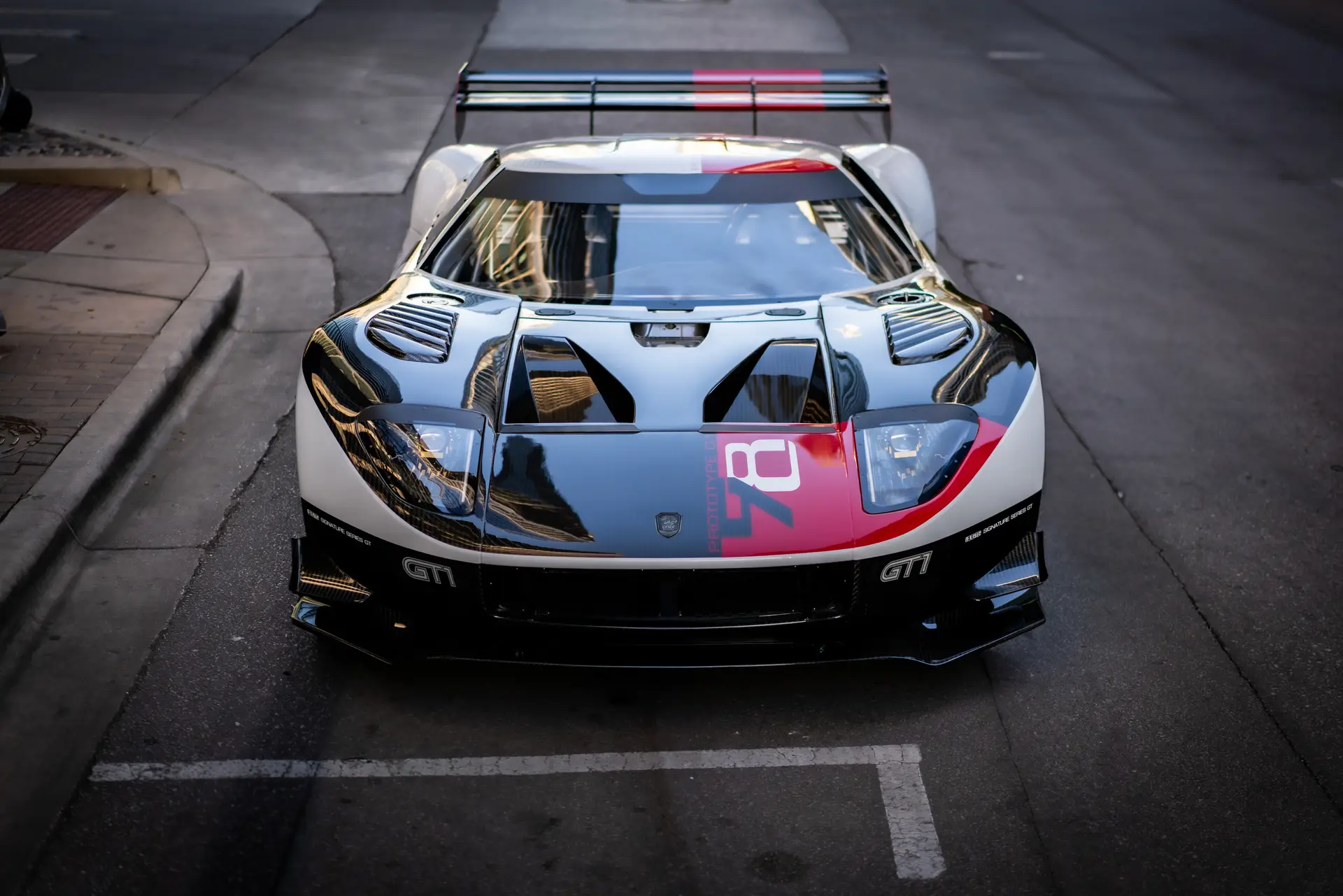
Join the Journey with US
Commission Your bespoke GT1 by clicking on the button below.
